كنترلهاي كيفي آب توسط بهداشت محيط
transcript:
1 كنترلهاي كيفي آب توسط بهداشت محيطدكتر محمد مسافري PhD بهداشت محيط استاديار دانشكده بهداشت دانشگاه علوم پزشكي تبريز اين مطلب در دوره آموزشی پايش و اندازه گريی بهداشت صنعتی که در در ماه 1385 دی پتروشيمی تبريز برگزار شد ارائه گرديده است .
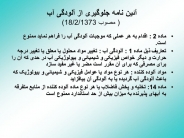
2 آئين نامه جلوگيری از آلودگی آب ( مصوب 18/2/1373)آئين نامه جلوگيری از آلودگی آب ( مصوب 18/2/1373) ماده 2 : اقدام به هر عملی که موجبات آلودگی آب را فراهم نمايد ممنوع است. تعاريف ذيل ماده 1 : آلودگی آب : تغيير مواد محلول يا معلق يا تغيير درجه حرارت و ديگر خواص فيزيکی و شيميائی و بيولوژيکی آب در حدی که آن را برای مصرفی که برای آن مقرر است مضر يا غير مفيد سازد مواد آلوده کننده : هر نوع مواد يا عوامل فيزيکی و شيميائی و بيولوژيک که باعث آلودگی آب گرديده يا به آلودگی آن بيافزايد ماده 14: تخليه و پخش فاضلاب يا هر نوع ماده آلوده کننده از منابع متفرقه به آبهای پذيرنده به ميزان بيش از حد استاندارد ممنوع است
3 چرخه كلاسيك عفونت منتقله توسط آب
4 Diseases Related to WaterWater-borne Diseases Water-based Diseases Water-washed Diseases Water-related Diseases
5 بيماريهاي منتقله توسط آبالف - بيماريهاي منتقله توسط آب (Water Borne Diseases) در اين طبقه بيماريهايي گنجانده ميشوند كه عامل اصلي بيماري در آب بوده و از طريق بلع به انسان منتقل ميشود. وبا، حصبه، شبه حصبه و بسياري از بيماريهاي عفوني ديگر در اين زمـره قرار ميگيرند. بهبود كيفيت آب و عدم استفاده از ديگر منابع غيربهداشتي آب حتي به طور موقت، ميتواند در از بين رفتن اين بيماريها نقش بسزايي ايفا نمايد. ب - بيماريهاي ناشي از عدم شستشوي كافي Diseases) (Water Washed وقوع اين بيماريها بيشتر به دليل عدم دسترسي به آب كافي است. از اين رو كميت آب بيش از كيفيت آن دخيل ميباشد. بيماري تراخم مثال خوبي از اين گروه از بيماريها است. افزايش كمّي مقادير آب مصرفي و بهبود شرايط دسترسي و قابل اعتماد و بهداشتي بودن آبهاي مورد مصرف در منازل و ارتقاي سطح بهداشت جامعه موثرترين راهكارهاي رفع اين گروه بيماريها تلقي ميشود.
6 بيماريهاي منتقله توسط آبج- بيماريهايي كه آب در چرخه انتقال آنها نقش دارد(Water Based Diseases) در اين گروه بيماريهايي قرار دارند كه عامل بيماري دوره اي از زندگي خود را در درون بدن ناقل آبزي سپري ميكند. شيستوزوميازيس مثال بارزي از اين گونه بيماريها است و بديهي است كه كاهش تماس با آب آلوده، كنترل جمعيت ناقلين و كاهش آلودگي منابع آب با مدفوع، راهكارهاي موثر كنترل اينگونه بيماريها هستند. د- بيماريهاي منتقله به وسيله حشرات ناقل مرتبط با آب (Water Related Insect Vectors) در اين گروه ناقل بيماري در دوره اي از زندگي آبزي بوده يا اينكه نزديك آب زيست ميكند. مالاريا از بيماريهاي شاخص اين گروه است. بهبود شرايط آبهاي سطحي، حذف جايگاه هاي پرورش و تكثير حشرات، كاهش ارتباط افراد با مكانهاي پرورش و تكثير حشرات و استفاده از وسايل حفاظتي در كنترل اين بيماريها بسيار موثر هستند.
7 مقادير مرگ و مير و ابتلاء به چند بيماري مهم مرتبط با آب
8 Water Quality & Child Survival
9 Microorganisms single-celled generally microscopicinclude bacteria, protozoa, algae, fungi, viruses may or may not be disease causing
10 Water Borne Diseases/PathogensBacteria Vibrio cholera - cholera Yersinia enterocolitica - gastroenteritis Escherichia coli - gastroenteritis Shigella sp.- gastroenteritis Listeria monocytogenes - flu-like symptoms Salmonella sp. - gastroenteritis, typhoid Campylobacter jejuni - gastroenteritis (animals sources)
11 Vibrio cholerae
12 Yersinia enterocolitica
13 E. coli
14 Shigella
15 Clostridium perfringens
16 Water Borne Diseases/PathogensViruses Polio Virus - paralytic poliomyelitis Rotaviruses - gastroenteritis Norwalk Viruses - gastroenteritis Hepatitis Type A and E - liver inflammation
17 Polio Virus
18 Rotavirus
19 Norwalk Agent
20 Water Borne Diseases/PathogensProtozoa Entamoeba histolytica - amoebic dysentery Giardia lamblia - intestinal disease Cryptosporidium - intestinal disease
21 Giardia lamblia
22 Water Disinfection استفاده از مواد شميائي اكسيد كننده مانند كلر، دي اكسيد كلر، ازن استفاده از فلزات مانند نقره، جيوه، مس استفاده از روشهاي فيزيكي مانند اشعه ماوراء بنفش، اولترا سوند، حرارت هاي بالا
23 واكنشهاي كلر در آب Cl2 + H2O HOCl + HCl HOCl H+ + OCL-Ca(OCl)2 Ca2+ + 2OCl- Free available chlorine
24 Testing of Indicator Organismsneed an indicator of potential pathogen contamination of water which is easy, reliable, inexpensive, quick, etc.
25 Requirements of Indicator Organismspresent when pathogens present in water absent in uncontaminated water present in higher numbers than pathogens in contaminated water better survival in water than pathogens easy to analyze
26 Coliform Bacteria - Indicators of Fecal Contaminationbacteria in the family Enterobacteriaceae generally include the genera Enterobacter, Klebsiella, Citrobacter, and Escherichia present in the intestinal tract of numerous organisms gram negative, non-spore forming rods ferment lactose with acid and gas production in 48 hours at 35 °C
27 Total Coliform Bacteriainhabit the intestinal tract of animals sources: fecal material, soil, water, grain some capable of reproduction in the environment non-fecal examples include: Klebsiella sp., Citrobacter sp., Enterobacter sp.
28 Fecal Coliform Bacteriasubset of the total coliform group separated from non-fecal coliforms by growth at 44.5 °C sources: fecal material capable of limited survival and growth in the environment primary example is Escherichia coli (E. coli)
29 Coliform Sample Preservationsodium thiosulfate added to chlorinated samples no additives for nonchlorinated samples recommended-drinking water samples iced required-source water samples iced
30 Coliform Sample Holding Timesdrinking water - 30 hours [40 CFR (f)] surface/source water - 8 hours [40 CFR (a)(1)]
31 Effects of Holding Time on Samplescoliform numbers may decline coliform numbers may increase hetertrophic (non-coliform) bacteria may increase and inhibit detection of coliforms in the sample
32 Coliform Methods
33 Approved Drinking Water Methods
34 Approved Source Water Methods
35 Approved Drinking Water Methods [40 CFR 141.21 (f)]Membrane Filter Method - total coliforms, fecal coliforms, E. coli Multiple Tube Fermentation Method- total coliforms, fecal coliforms, E. coli
36 Approved Drinking Water Methods [40 CFR 141.21 (f)]Presence/Absence Method -total coliforms, fecal coliforms, E. coli Colilert Method - total coliforms, E. coli Colisure Method - total coliforms, E. coli
37 Membrane Filter Method4 to 5 day test metallic green colonies on endo medium-presumptive coliform positive growth/gas in LTB and BGBB - confirmed total coliform positive growth/gas in LTB and EC medium - confirmed fecal coliform positive growth and gas in LTB and growth and fluorescence in EC + MUG - confirmed E. coli positive
38 Membrane Filter Method (Endo agar with coliform growth)
39 Multiple Tube Method 5 day testgrowth/gas in LTB- presumptive coliform positive growth/gas in BGBB - confirmed total coliform positive growth/gas in EC medium - confirmed fecal coliform positive growth and fluorescence in EC + MUG - confirmed E. coli positive
40 Multiple Tube Fermentation Method (Total Coliforms)
41 Fecal Coliform/E. coli Multiple Tube Method - EC medium + MUG
42 Presence Absence Method5 day test growth/acid in PA broth - presumptive coliform positive growth/gas in BGBB - confirmed total coliform positive growth/gas in EC medium - confirmed fecal coliform positive growth and fluorescence in EC + MUG - confirmed E. coli positive
43 Colilert and Colisure Methods1 day test color change in culture media - confirmed total coliform positive production of fluorescence under 366 nm UV light - confirmed E. coli positive
44 Colilert Method
Download ppt "كنترلهاي كيفي آب توسط بهداشت محيط"